
Garage Door Torsion Springs: Specs and Lifespan
What torsion spring specs mean, how cycle ratings translate to years, why both springs get replaced, and how to evaluate a repair quote.
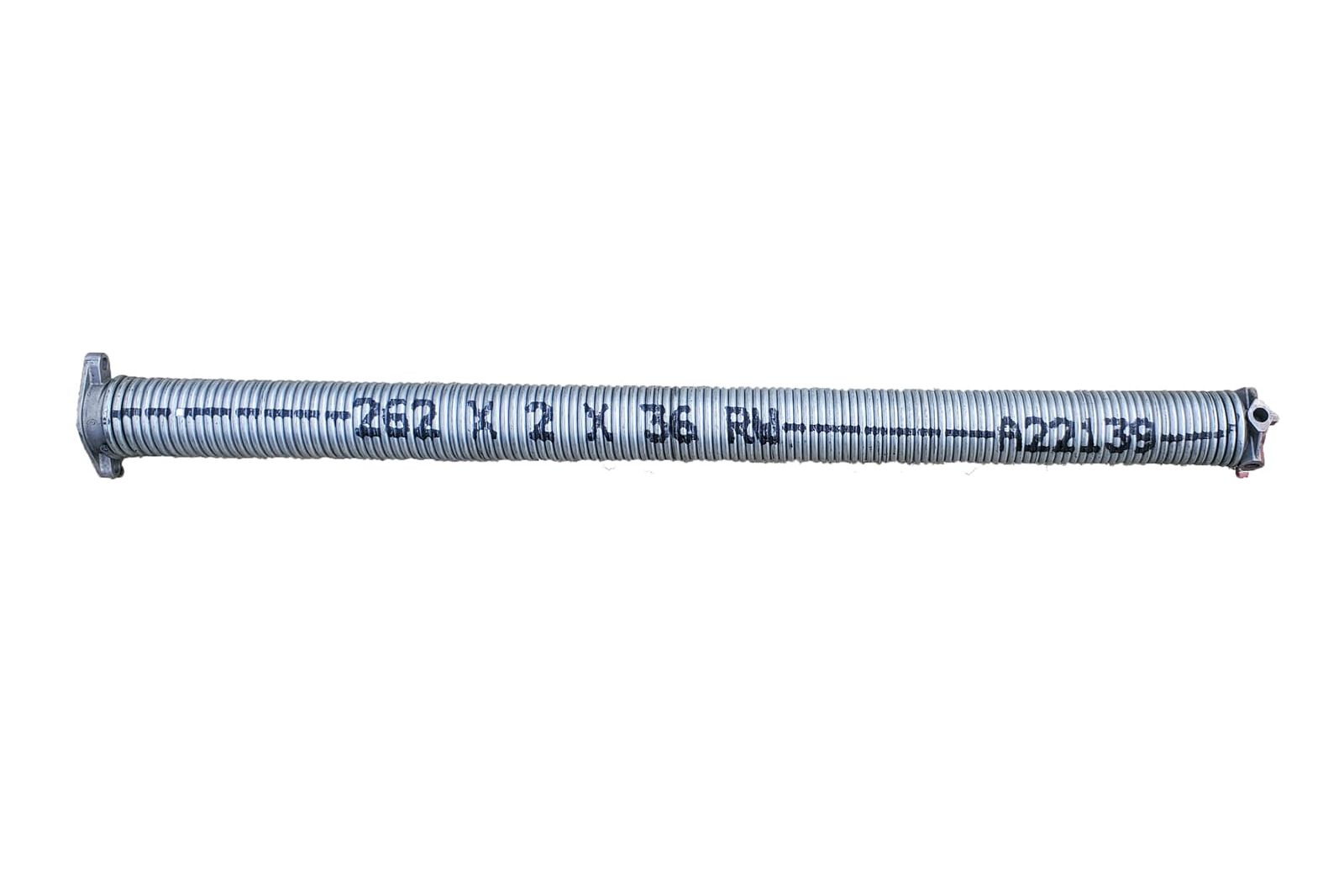
A garage door torsion spring is defined by four specs, a cycle rating, and (usually) a matched pair, and the price on a repair quote is really a stand-in for those five things. Understanding what you're paying for makes it much easier to tell a fair quote from a rushed one.
If your door won't open right now and you're trying to figure out what's wrong before you even get to a quote, our symptom-by-symptom diagnosis guide is the faster read. This one is for understanding the part itself, what it costs, how long it lasts, and how to read a quote.
What's the difference between a torsion spring and an extension spring?
A torsion spring mounts on a horizontal metal shaft directly above the closed door and lifts by twisting (torque), while an extension springs run along the horizontal tracks on either side of the door and lift by stretching. You can tell which one your door has just by looking up at the closed door from inside the garage.
If you see a single tightly wound coil (or two coils side by side) centered on a shaft above the door opening, that's torsion. If instead you see long, loosely coiled springs running the length of the tracks near the ceiling, stretching and relaxing as the door moves, that's extension. In our experience, torsion is now the standard on the large majority of newer homes in our part of Missouri. It's self-contained rather than mounted along an open track, and unlike an extension spring, it won't turn into a projectile if it breaks. Extension springs still show up on older doors and some budget-grade replacements, and unlike torsion springs, they need a safety cable running through them so a broken spring doesn't fire loose. DASMA is explicit about this: "If your garage door has extension springs, you need a safety cable that runs through the spring and secures to the wall or ceiling at each end" (DASMA, Garage Door Safety Tips).
What do the four numbers on a torsion spring actually mean?
A torsion spring is defined by four measurements, and a replacement spring has to match all four or the door's balance and lift will be off even if the spring looks close. Getting one of the four wrong is the most common reason a "correct" spring still doesn't lift the door properly.
- Wire size: the diameter of the steel wire itself, measured across 10 to 20 coils in inches and checked against a standard wire-size chart. A caliper reading directly on the wire can be thrown off by rust or coating, so the coil-count method is more reliable.
- Inside diameter: the diameter across the inside of the spring at rest, measured to the nearest 1/16 inch. Residential torsion springs commonly run 1-3/4", 2", or 2-1/4".
- Length: the end-to-end measurement along the coils, not counting the end cones. If the spring has already broken, both halves get pulled together first to measure the original length.
- Wind direction: whether the coils are wound right or left, determined by which way the wire end points. A two-spring door needs one of each so the shaft winds evenly on both sides.
(Source for all four: IDC Spring, "How to Measure and Order Torsion Springs".)
How long do torsion springs actually last?
Torsion spring lifespan is a function of its cycle rating (how many open-close cycles it's built to survive) divided by how often your household opens the door. A standard 10,000-cycle spring lasts about 6.8 years at four opens a day, typical for most households, but the same spring wears out in under five years in a heavier-use home.
Cycle life itself is the subject of a dedicated industry standard, DASMA's TDS-190, "Factors Affecting Spring Cycle Life" (DASMA TDS-190), and 10,000 cycles is the baseline rating a standard residential spring is built to. Most residential springs are sold in three tiers: standard, extended-life, and high-cycle. The math below is simple arithmetic, cycle rating divided by (opens per day times 365), applied to those tiers.
| Cycle Rating | ~Years at 2 Opens/Day | ~Years at 4 Opens/Day (typical) | ~Years at 6+ Opens/Day (heavy use) |
|---|---|---|---|
| 10,000 (standard) | ~13.7 years | ~6.8 years | ~4.6 years |
| 20,000 (extended-life) | ~27.4 years | ~13.7 years | ~9.1 years |
| 30,000 (high-cycle) | ~41.1 years | ~20.5 years | ~13.7 years |
A standard 10,000-cycle spring lasts roughly twice as long in a light-use household as it does in a heavy-use one, which is why matching a spring's cycle rating to how your family actually uses the door matters more than chasing the highest number on the shelf.
Why do garage door companies always replace both springs at once?
On a standard two-spring door, both springs sit on opposite ends of the same shaft and share the load evenly, so they accumulate the same number of open-close cycles over the door's life. If one has fatigued to the point of breaking, the other has been through the same wear and is statistically close behind.
Replacing only the broken spring also leaves the door running on two springs of different age and remaining life, which throws the shaft's rotational balance off and accelerates wear on the newer spring as it compensates. Pairing both springs in one visit is standard practice for this reason, and it typically costs less in combined labor than two separate service calls down the road (This Old House, "Garage Door Spring Replacement Cost"). It's the same logic behind keeping the whole system on a regular maintenance schedule rather than only reacting when something breaks.
Does Missouri weather really wear out garage door springs faster?
Coating matters more than most homeowners expect in a climate that swings from icy winters to muggy summers. St. Louis-area humidity averages around 69% year-round, peaking near 74% in December, with temperatures ranging from an average January low near 24°F to a July high near 90°F (Current Results; Weather-and-Climate.com).
Torsion springs are typically either galvanized (zinc-coated) or oil-tempered. Galvanized coating is "relatively impervious to corrosion" because the zinc seals out moisture, which makes it the better performer through our humid summers, though it needs somewhat more routine adjustment over time. Oil-tempered springs have no real moisture barrier beyond a light oil coating and are more prone to surface rust without regular lubrication, but they need less routine adjustment (IDC Spring, "Oil-Tempered vs. Galvanized vs. Coated Springs"). For garages in St. Charles County that see real humidity swings across the seasons, coating choice is worth asking about, not just the cycle rating.
Why is torsion spring replacement not a DIY job?
A wound torsion spring stores enough rotational torque to lift the full weight of your garage door, and that stored energy doesn't care whether the person releasing it has the right tools. This is the one repair on this site with no DIY workaround: it takes winding bars sized to the cone and a technician who does this daily.
Winding or unwinding a torsion spring means gradually releasing (or adding) that stored torque a quarter-turn at a time with steel winding bars. If a bar slips, or if tension is released in an uncontrolled way, the bar can whip out of a person's hands with enough force to cause a serious blunt-force injury or laceration. Larry's rule for every technician on the crew is the same: never skip a step because the shaft looks calm. There's no consumer-grade equivalent to the tools a trained technician uses, which is why this is squarely a job for our repair technicians rather than a weekend project. If you're not sure a spring is even your problem yet, the diagnostic guide walks through how to confirm it before anyone touches the shaft.
What does a correct professional spring replacement actually involve?
A correct replacement is more than swapping in a same-looking spring. It starts with securing the door so it can't fall or shift, safely relieving the existing spring tension with properly sized winding bars, and confirming the new spring is actually matched to the door's current weight, not just to whatever was there before.
Doors get heavier over time (added insulation, a new heavier panel, hardware changes), so matching "same for same" isn't always correct. After the new spring or pair is installed and wound to spec, a proper job includes a balance test, where the door should hold its position roughly mid-track when disconnected from the opener and moved by hand, and a safety-reverse retest on the opener before the technician leaves. Skipping either of those steps is how a door ends up straining the opener motor or reversing unpredictably months later.
How do you evaluate a garage door spring quote?
A fair quote should tell you what you're actually buying: the cycle rating and grade of the spring, whether both springs are included on a two-spring door, and whether a safety cable inspection is part of the visit, not just a parts-and-labor total.
Red flags include a quote for a generic or unrated "universal" spring with no cycle rating listed, no mention of a balance test after install, or a number that comes in well under every other quote you have gathered with no explanation for what is different about it. If a quote can't answer "what cycle rating am I getting and are you doing both springs," that's worth a follow-up question before you sign off.
Whether you're planning ahead or dealing with a spring that's already gone, we're happy to walk through what your door actually needs before any work starts. Contact us or see our full repair services, and if you're nearby, we serve homeowners throughout Wentzville and O'Fallon directly.
Frequently Asked Questions
- Are both garage door springs replaced at the same time?
- On a two-spring door, yes, and it is worth insisting on. Both springs have absorbed the same number of cycles, so when one fails the other is close behind. Replacing just the broken one usually means paying for a second service call within months, and running the door on a mismatched pair until then.
- How long do garage door torsion springs actually last?
- It depends on the cycle rating and how often the door opens, not on a fixed number of years. A standard 10,000-cycle spring lasts roughly 6.8 years for a household opening the door four times a day, but that same spring can be gone in under five years for a heavier-use household.
- Can I replace a garage door spring myself?
- We don't recommend it. A wound torsion spring stores enough rotational force to lift the full weight of the door, and a slipped winding bar or an uncontrolled release can cause serious injury. This is one of the few garage door jobs that genuinely calls for the right tools and training every time.
- What's the difference between a torsion spring and an extension spring?
- A torsion spring mounts on a horizontal shaft above the closed door and lifts by twisting. An extension spring runs along the horizontal tracks on each side and lifts by stretching. Torsion springs are the standard on most newer homes in our area; extension springs show up more often on older or budget-grade doors.
- Why do garage door companies replace both springs even if only one broke?
- Two-spring doors put one spring on each end of the same shaft, and both accumulate the same number of open-close cycles over the door's life. If one has fatigued to failure, the other is statistically close behind, and mismatched spring age throws the door out of balance in the meantime.
- What's a spring's 'wind direction' and why does it matter?
- Wind direction describes which way the spring's coils are wound, right or left, and it's one of four measurements (along with wire size, inside diameter, and length) needed to order the correct replacement. A two-spring door needs one of each wind direction so the shaft winds evenly on both sides.
Need Garage Door Help?
No gimmicks, no hidden fees. You don't pay until the job is done.