
Garage Door Insulation: What R-Value Actually Buys You
Garage door R-value explained honestly: what it measures, what it doesn't, and when a seal fix beats a new insulated door for tri-county Missouri homes.
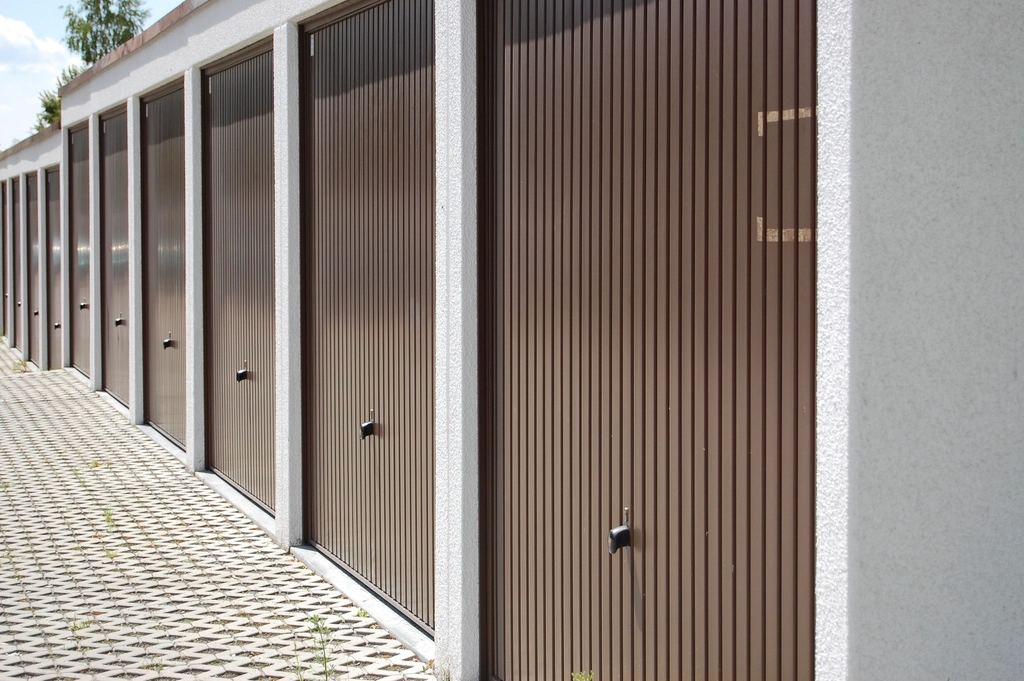
Garage door insulation matters less than most people assume, and more than a few who've already bought a kit want to admit. Most tri-county homes gain more from sealing air leaks than from chasing a bigger R-value, and it depends on one question: is there conditioned living space above or beside your garage?
Is garage door insulation worth it?
Honestly, it depends on your garage more than your door. If a bedroom, bonus room, or living space shares a wall or ceiling with an attached garage, insulation is usually worth doing. If your garage is detached, or attached but used only for storage, you'll get more comfort per dollar from fixing seals than from a higher-R door.
That's not the answer a sales pitch gives you, but it's the one that holds up. We'd rather tell a customer that resealing will fix the draft they're feeling than sell them a whole new door that solves a problem they didn't actually have.
What does R-value actually mean on a garage door?
R-value on a garage door is a calculated estimate of a single panel section's core insulation. By the industry's own definition, it leaves out the joints, stiles, and hardware that make up the rest of the door, not just the insulating foam inside it.
DASMA, the trade association that publishes the garage door thermal performance standard, says the calculated method "estimates the insulating value of a door section without accounting for the complexities of door section joints, stile attachments, etc., and therefore should not be used for garage door assemblies" (DASMA Technical Data Sheet #163).
In other words, the R-value on a spec sheet describes the foam, not the door. U-factor is the more complete number: it's measured on the whole installed door assembly, tested in a lab chamber under the ANSI/DASMA 105 standard, with one side held at a constant temperature and the other cooled while technicians measure the energy it takes to hold that difference. DASMA is explicit that "recognized building codes and standards deal with garage door thermal performance in terms of U-factor," and that U-factor and R-value "are not reciprocals of each other" for garage doors (DASMA TDS #163).
Why the R-value on the spec sheet overstates real-world performance
DASMA's own worked example makes this concrete. A 22-inch door section with polyurethane foam (1-3/8 inches thick over most of the panel, 1-7/8 inches over the rest) and a standard air-film allowance calculates out to an R-value of R-16.47 (DASMA TDS #163). That's a real number, but it's a lab calculation of the foam core, not a measurement of your installed door with its joints, weatherstripping, and hardware included. Two doors with the same printed R-value can perform noticeably differently once they're hung, sealed, and cycling through a Missouri winter.
Polystyrene or polyurethane: which insulation actually performs better?
Polyurethane outperforms polystyrene, but polystyrene still beats no insulation at all. Polyurethane is a liquid foam injected between a door's steel skins during manufacturing, expanding to fill the cavity and bonding to the frame. Polystyrene is a rigid, pre-cut foam board simply fitted into place, less dense and less insulating per inch.
That extra bonding also adds structural rigidity and dent resistance, giving polyurethane a higher R-value per inch than polystyrene (Clopay, "How to Choose an Insulated Garage Door"). Polystyrene still costs less and is a real step up from an uninsulated steel door.
Across Clopay's residential lineup, published R-values run from about R-6.3 on thin, non-insulated-core doors up to R-20.4 on the top polyurethane five-layer doors, with most mid-tier steel doors topping out around R-18.4 (Clopay, "Insulated Garage Doors" buying guide).
Single-layer, double-layer, and triple-layer construction
The construction type matters as much as the foam. A single-layer door is bare steel skin with no insulating core at all. A double-layer door adds an insulation core (polystyrene or polyurethane) behind the steel face, but the interior is often exposed foam or a thin backer. A triple-layer door sandwiches the foam core between an exterior steel skin and an interior steel or vinyl skin, fully enclosing it, which is what gets you into the higher R-value range and the tightest seal at the panel itself (Clopay buying guide). For most homes, the jump from single to a well-built double or triple-layer door is where the real, felt difference happens. Chasing the last few points of R-value above that tends to deliver less than the price tag suggests.
Does insulating an attached garage actually lower your heating and cooling bills?
It depends on what's next to the garage, not just what's in the garage door. The U.S. Department of Energy's Building America Solution Center treats a door between the garage and the house the same as any other exterior door, recommending it be weatherstripped and air-sealed like the rest of the home's envelope.
The agency, operated by Pacific Northwest National Laboratory, is explicit: "Doors adjacent to unconditioned spaces should be treated the same way as exterior doors," with guidance to weatherstrip that door and air-seal the shared wall thoroughly, partly for energy reasons and partly to keep vehicle exhaust and other pollutants out of the living space (DOE Building America Solution Center).
That guidance is aimed at the boundary between the garage and the house, not specifically at the garage door's own R-value. We can't point you to a DOE or NOAA figure that puts a specific percentage on how much a garage door's insulation alone shaves off a whole-house energy bill, and we're not going to invent one. What we can tell you, based on how these boundaries actually work, is straightforward:
When insulation earns its cost
If you have a bedroom, home office, or bonus room directly above or beside an attached garage, that shared surface is doing a lot of thermal work. Insulating the garage door helps keep the garage itself closer to a stable temperature, which reduces the swing that shared wall or ceiling has to handle. Combined with a properly sealed house-to-garage door, this is the scenario where insulation is most likely to show up in comfort and, to some degree, in your energy bill.
When it's mostly wasted money
If your garage is detached, or it's attached but there's no conditioned space touching it (just an unfinished space above, or a garage that only borders a driveway and yard on three sides), the garage door's R-value mostly affects how hot or cold the garage itself gets. That's a real comfort benefit if you work out there or store anything temperature-sensitive, but it's not going to move your house's heating and cooling bill in any way you'd notice. In that case, spend on sealing before you spend on insulation.
Retrofit kit or a new insulated door?
Effort and real performance do not track each other here. The lightest-touch options add the least measurable R-value, and sealing, which is not insulation at all, is the one most homes actually need. Here's how the common options compare for a typical tri-county garage door.
| Option | What It Actually Adds | Air Seal | Best Fit |
|---|---|---|---|
| Reflective/radiant foil kit | Minimal true R-value; reflects some radiant heat | None | Detached or occasional-use garage |
| Rigid foam board retrofit kit | Meaningful panel R-value added to an existing uninsulated door | None; panel only | Upgrading an existing steel door without replacing it |
| New double-layer insulated door (polystyrene core) | Moderate R-value, factory-sealed construction | Factory perimeter seal | Attached garage without much adjacent living space |
| New triple-layer insulated door (polyurethane core) | Highest R-value of the four | Best factory air seal at the panel | Attached garage with living space directly above or beside it |
| Bottom seal + perimeter weatherstripping | No R-value at all | Closes the leak path the others ignore | Almost every home, insulated or not |
Note the Air Seal column. Three of these five options do nothing about air movement, which is the mechanism most people are actually feeling when they say the garage is cold.
The last line in this table, sealing, is the one most tri-county homeowners actually need, and it is also the least expensive of the five.
Before you insulate, is your real problem a bad seal?
For a lot of homes, yes. Bottom seals and perimeter weatherstripping are the biggest air-leak path on most garage doors, and fixing them costs a fraction of what a new insulated door runs. The DOE's Building America guidance treats a well-sealed door as the primary defense, not the panel's core R-value (DOE Building America Solution Center).
Weatherstripping should go on clean, dry surfaces above 20°F, fitted snugly enough to seal the door without making it hard to close (DOE Building America Solution Center).
If you can see daylight around the edges when the door is closed, feel cold air pooling at the bottom on a winter morning, or notice the rubber has gone stiff and cracked, that's your actual problem, not your R-value. Replacing the seal is a small fraction of the cost of a new insulated door, and it often resolves the "my garage is freezing" complaint entirely with no new door required. If the door itself is also struggling to open, close, or stay aligned, that's a mechanical issue rather than a sealing one, and our symptom-by-symptom diagnosis guide is the faster read for sorting that out first. We cover seal checks as a standard part of a routine tune-up in our garage door service schedule guide, and it's usually the first thing worth ruling out before spending real money on insulation.
What R-value should Missouri homeowners actually look for?
St. Louis metro sees a real seasonal swing worth planning around: January averages a high of 40°F and a low of 24°F, while July averages a high of 90°F and a low of 71°F, based on NOAA's 1991-2020 climate normals (Current Results).
The broader northern Missouri and Ozarks region, which brackets St. Charles, Lincoln, and Warren counties, averages around 100 to 110 days a year with below-freezing temperatures (Washington University in St. Louis, "Missouri's Weather and Climate").
For an attached garage with living space above or beside it in this climate, a factory double or triple-layer door in the neighborhood of R-18, combined with tight seals, is a reasonable target that matches what most mid-tier residential lines offer: Clopay's own residential lineup runs from about R-6.3 up to R-20.4, with most mid-tier steel doors landing around R-18.4 (Clopay buying guide). For a detached garage or one without adjacent conditioned space, don't feel obligated to chase the top of that range. Fix your seals, pick a basic insulated door if you're replacing one anyway, and put the rest of the budget somewhere it'll actually be felt.
If you're weighing a new insulated door for a home in St. Charles County or anywhere in the tri-county area, our garage door installation team, based in Wentzville, can walk your specific garage, tell you honestly whether insulation or sealing is the better first move, and quote a door that matches your actual situation instead of the highest R-value on the price list. Reach out through our contact page and we'll take a look.
Frequently Asked Questions
- Is garage door insulation worth it?
- It depends on your garage, not just your door. If you have living space directly above or beside an attached garage, insulation is usually worth it. If the garage is detached or used only for storage, the money is almost always better spent on sealing gaps than chasing a higher R-value.
- What R-value do I need for a garage door in Missouri?
- For an attached garage with conditioned space above or next to it, look for a factory double or triple-layer door with an R-value around R-18, which is where most mid-tier residential lines land (Clopay's own lineup runs from about R-6.3 up to R-20.4, with most mid-tier steel doors around R-18.4) (Clopay, https://www.clopaydoor.com/residential/buyingguide/garage-door-materials/insulation). For a detached or storage-only garage, a basic insulated door or even a good seal job is often enough.
- Is polyurethane or polystyrene garage door insulation better?
- Polyurethane performs better. It's injected as a liquid foam that expands to fill the space between the steel skins and bonds to the frame, which adds rigidity and a higher R-value per inch than polystyrene, which is a rigid foam board simply fitted into place (Clopay, https://www.clopaydoor.com/residential/buyingguide/garage-door-materials/insulation/how-to-choose-insulated-garage-door). Polystyrene still beats no insulation at all, and it costs less.
- Can you retrofit insulation into an existing garage door, or do you need a new door?
- You can retrofit. Reflective foil kits and rigid foam board kits both fit into most existing steel door panels for well under the cost of replacement (Radiant Barrier USA, https://www.radiantbarrierusa.com/blog/garage-door-insulation-cost). A retrofit adds panel R-value but doesn't improve the door's air seal at the joints and edges the way a factory-built insulated door does.
- Will insulating my garage door lower my house's heating and cooling bill?
- Only meaningfully if the garage shares a wall, ceiling, or door with conditioned living space, and even then the seal around that shared boundary matters as much as the garage door's own R-value (DOE Building America Solution Center, https://basc.pnnl.gov/resource-guides/air-sealing-doors-adjacent-unconditioned-space). For a detached garage, insulation mostly changes garage comfort, not your house's utility bill.
- How do I know if I need new seals instead of, or before, insulation?
- If you can see daylight around the edges of a closed door, feel a draft at the bottom, or notice the weatherstripping has cracked and stiffened, fix that first. Resealing costs a small fraction of what a new insulated door does, and it often solves the cold-garage complaint on its own.
- What's the difference between garage door R-value and U-factor?
- R-value is a calculated estimate of the insulating core of a single door section, and by the industry's own standard it excludes joints, stiles, and thermal breaks (DASMA Technical Data Sheet #163, https://www.dasma.com/wp-content/uploads/2022/09/TDS163..pdf). U-factor is measured on the entire installed door in a lab under ANSI/DASMA 105 and is what building codes actually reference, which makes it the more honest number for real-world performance.
Need Garage Door Help?
No gimmicks, no hidden fees. You don't pay until the job is done.